March 19, 2026
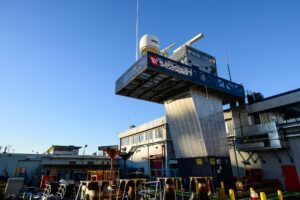
The Land-Based Test Site (LBTS),
the X band radar atop
Comprised of an External Communications Tower and an electronics testing laboratory, the new Land-Based Test Site at Vancouver Shipyards forms a critical part of our strategic initiative to develop an in-house Electronic Systems Integrator for Polar, MPI and beyond, allowing us to do much of our vessel-bound electronics testing on-site and on schedule. Its core purpose is to test critical shipboard systems like communications, navigation and radar before they’re installed.
By bringing this testing ability in-house, Seaspan is growing an internal capability that affords us greater control over our build processes, upskills our workforce, and gives us the option to market this capability as a service to external customers.
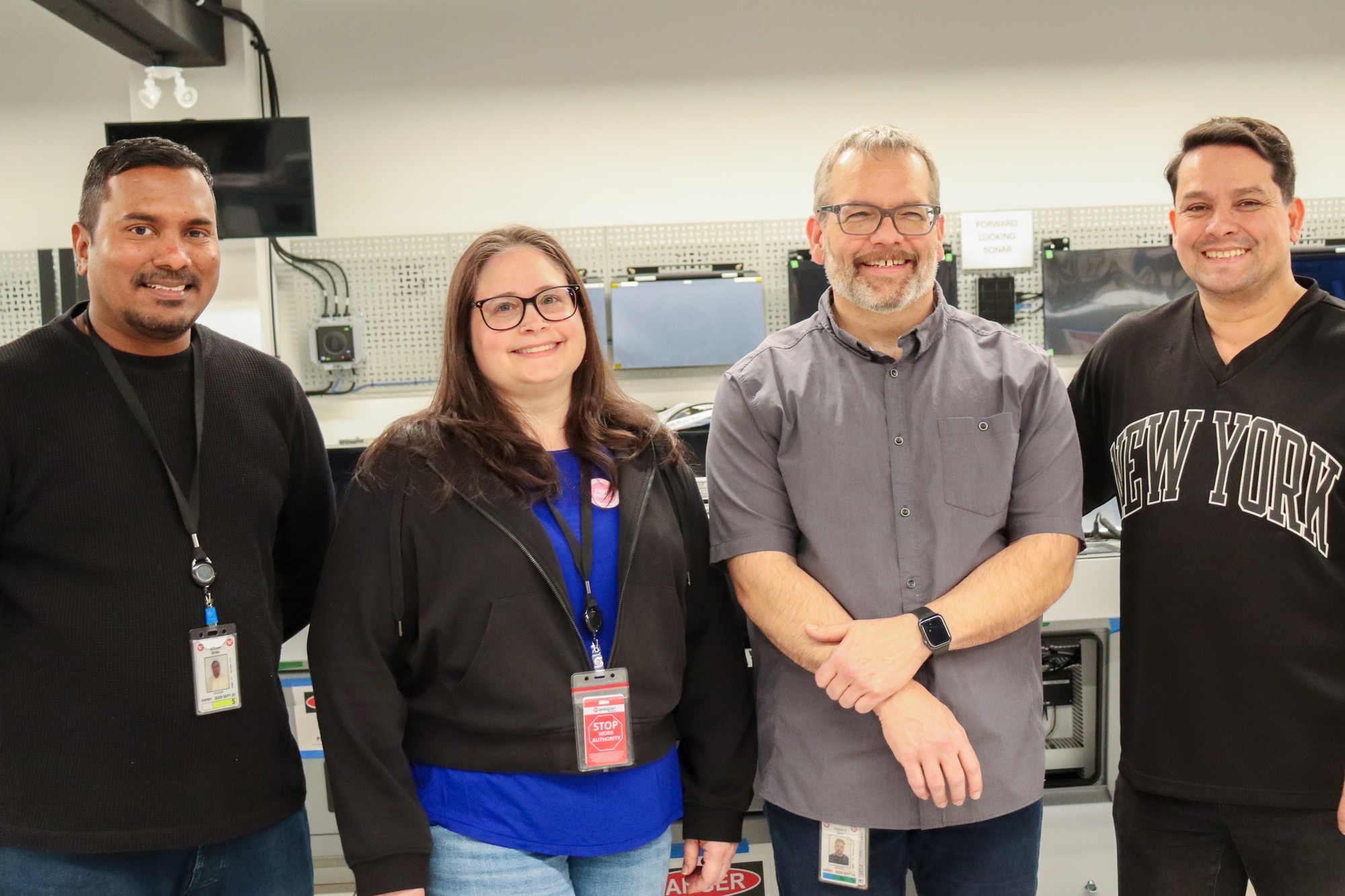
Step into the LBTS today and you’ll see Polar’s mock bridge, featuring the very same consoles, racks, interfaces, and over 15km of power and network cabling that will one day be installed on the vessel.
As the team continues their work to configure and test Polar’s electronic systems, they recently completed a successful test of the vessel’s S band radar and its MF/HF (Medium Frequency / High Frequency) radio equipment, too. But while the LBTS’ technical sorcery is the star of the show, the real magic comes from this tight-knit team that make it all happen.
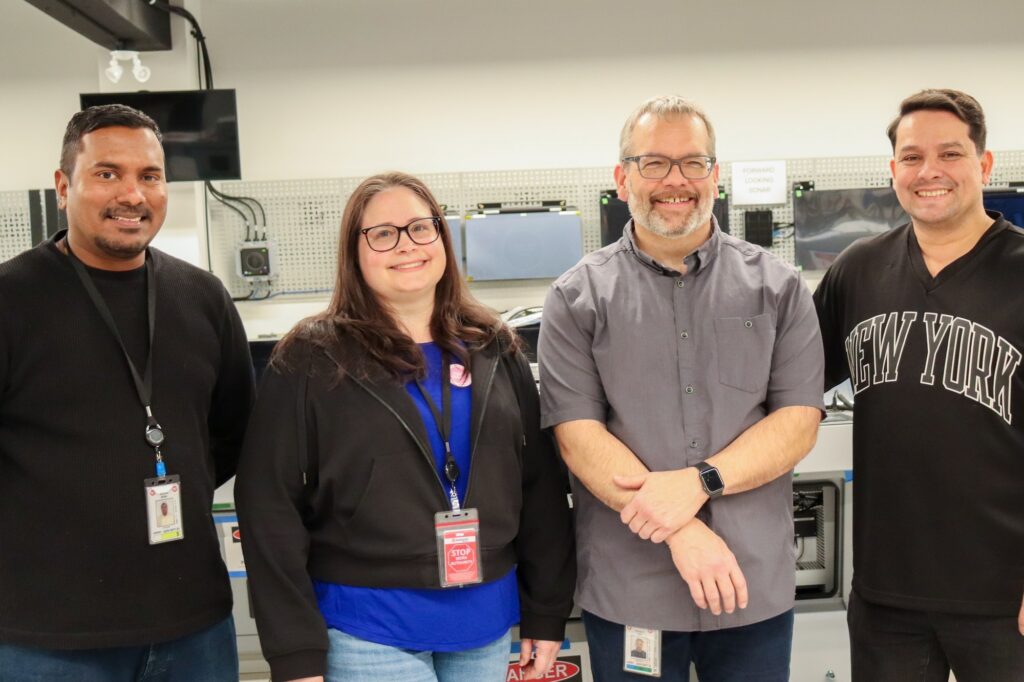
They were hard at work in late January ensuring that Polar’s S band radar, used primarily for navigation and weather monitoring, and their MF/HF radio, used for communications and emergency signals, all functioned safely and effectively. With the success of December’s X band test (first major milestone for the LBTS), the team were intent on maintaining the good fortune they’d accumulated—but where the X band test was conducted safely as expected, the risks were different this time.
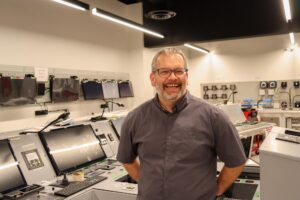
Clayton Dyck, LBTS Area Manager
“The MF/HF is a high-powered communications antenna used to send and receive emergency signals when you’re in trouble; but that high power means it can also do a lot of damage if not used correctly,” says Clayton Dyck, the LBTS’ Area Manager.
Clayton joined Seaspan in 2016 to manage the OFSV program’s electrical scope, bringing nearly 20 years of electrical engineering knowledge to the business before taking on a management role at the LBTS.
But the systems that make up the web-like complexity of the LBTS didn’t just appear overnight—they’re the result of a team who, supported by over 40 engineers across the business, have built a one-of-a-kind lab where systems are tested and de-risked before their eventual installation.
Similar to Clayton, William Britto, LBTS Technician, is an electronics engineer with experience in the marine industry; William specializes in the integration and commissioning of Bridge Navigation Systems on vessels, and has done so in countries throughout the world.
“My role during the test was to check that everything was going as expected and there were no issues. We follow Canada’s Safety Code 6,” which regulates acceptable exposure to RF energy, “so I made sure we followed that as required; we even wear small badges that measure exposure as an early-warning system in case something isn’t operating as expected.”
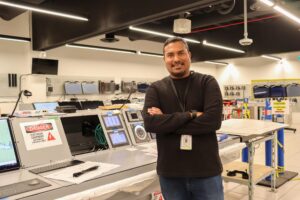
William Britto, LBTS Technician
Day-to-day, William’s role is focused on testing and integrating bridge navigation systems, along with leading system configuration, writing and reviewing system test agenda, and other critical responsibilities.
“The LBTS is one of the few labs in the world where you can experiment and test things in the room; you can’t do that on a ship. Here at Seaspan, we have everything in one place and the equipment is state-of-the art, including a NMEA testing unit,” used for diagnosing, monitoring, and simulating marine data networks.
Working hand-in-hand with William during the test was Deanna Buckley, LBTS Technician. Deanna is a Red Seal-qualified technician and has been with Seaspan for nearly 3 years, having spent many years in the healthcare industry.
“It was a great experience, William and I partnered on the Lockout / Tag Out (LOTO)” says Deanna, speaking of the critical safety procedure that prevents injuries by ensuring machinery is de-energized and cannot start up unexpectedly.
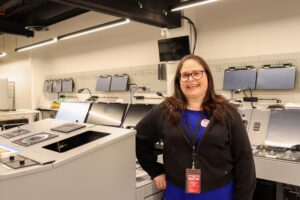
Deanna Buckley, LBTS Technician
“I work with an amazing team, and we wouldn’t be where we were without our support for each other.”
With a background in industrial controls and instrumentation, Deanna brings extensive experience supporting complex operational technology deployments to the business.
“Every day there’s a new challenge; being involved in the work on a flagship vessel means learning a lot of best practices, but also being a part of unique experiences. My work is focused on the bridge consoles, working out how it all behaves and most importantly, that all its bells and whistles are functioning.”
Where Clayton, William and Deanna bring extensive electrical and operational experience to the team, Geovanny Lopez, LBTS Specialist brings decades of IT and cybersecurity administration to complete this lean group.
Geovanny’s role ensures that the sensitive equipment within the LBTS is kept secure. “We have an isolated network because of the nature of the equipment in the LBTS.”
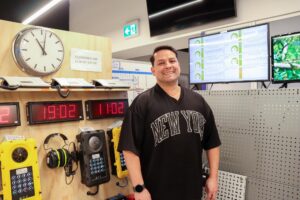
Geovanny Lopez, LBTS Specialist
On the day, Geovanny was in charge of ensuring the operational security of the equipment, checking that everything was operating as expected, both safely and securely.
“I enjoy more hands-on jobs and I like to do things. Our equipment and tools are highly specialized because everything we work on here in the lab is specifically designed to save time, cost, and resources for the production team.”
It’s a sentiment echoed by Clayton, who, through his work on the OFSV program, knows how important it is to have a strong foundation for production to quite literally build upon. “What we do in here saves production tenfold through the time we save doing these configurations and additional checks out there. We want people to come by and play with things, to learn how they work before they’re installed on the real thing.”
As the testing concluded, the team were once again proud to say that their good fortune, built upon their combined excellence and experience, continued: the S band and MF/HF testing had gone as expected, safely and securely.