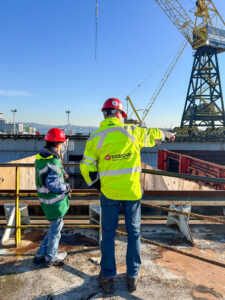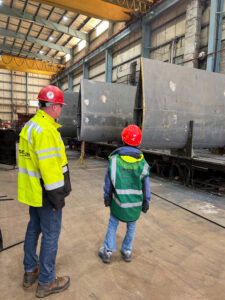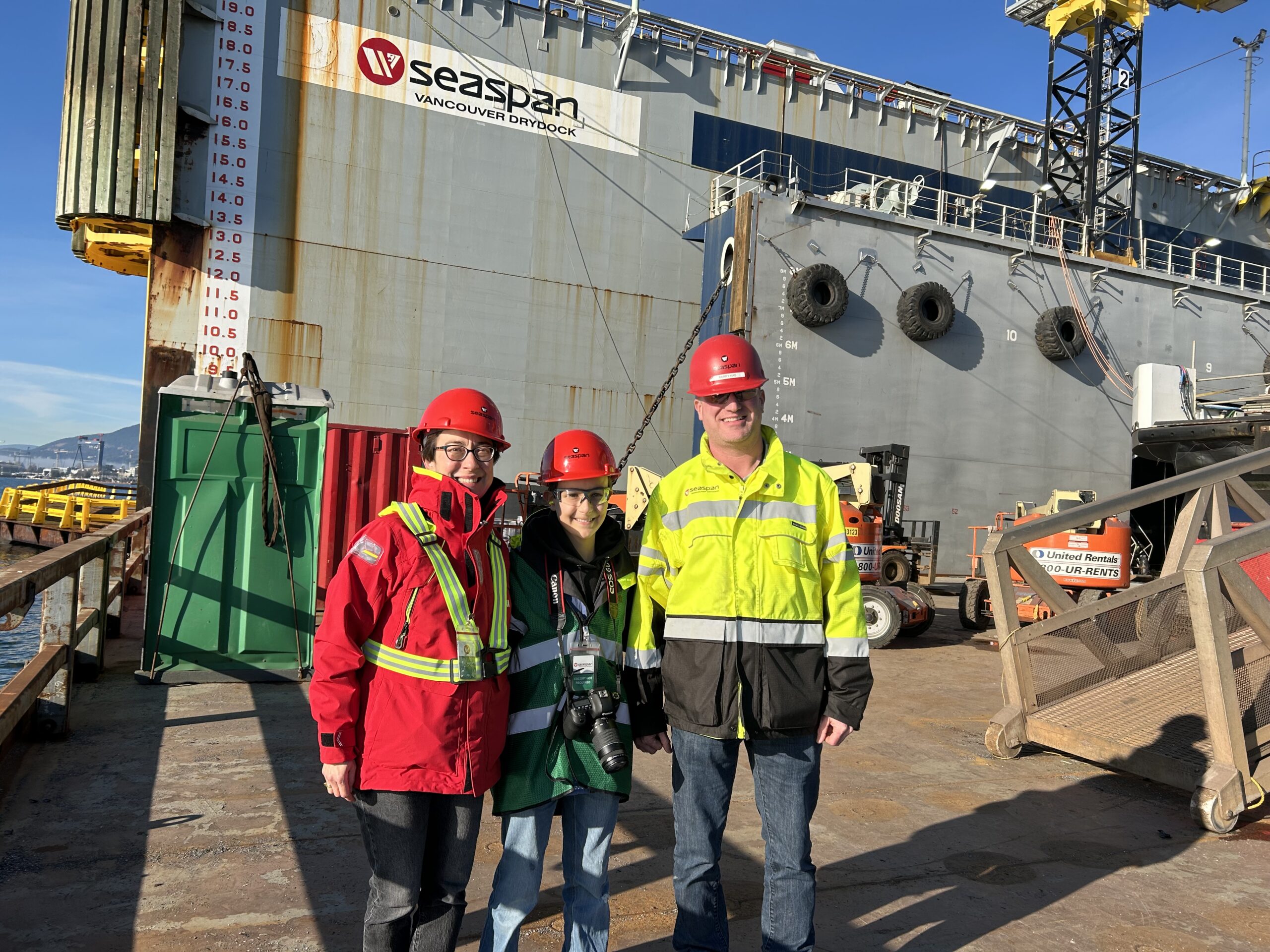
With camera in hand, Eli Prater arrived at Seaspan’s Vancouver Drydock with a long list of questions for Barry Kas, Director of Operations.
He had just come from Seaspan’s Marine headquarters, where he had spent the morning participating in a tugboat tour guided by Port Captain Kyle Russell.
Barry first met Eli last November, at the Pacific Marine Expo in Seattle, when Eli approached the Seaspan booth.
As a marine industry enthusiast, Eli made a strong first impression on Barry, showcasing his in-depth knowledge and interest in the goings-on at the drydock. Barry immediately offered him a tour, encouraging Eli to stop by Seaspan if he was ever in Vancouver.
Only a few months later and Eli made good on that offer, travelling from Seattle to North Vancouver along with his family.
The catch? Eli isn’t exactly a member of the marine industry — yet. As a sixth grader, Eli is well aware that he’s not the typical attendee of events like Pacific Marine Expo, the largest commercial marine trade show on the West Coast.
“I am the only kid at Pacific Marine Expo who is willingly there and not just tagging along with a parent who is an exhibitor. People are starting to recognize me and go ‘Oh! You’re that kid!’” Eli said.
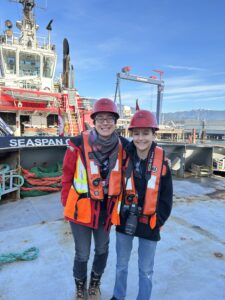
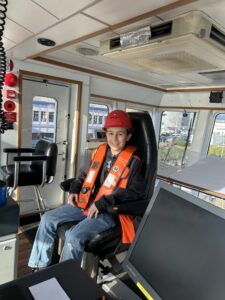
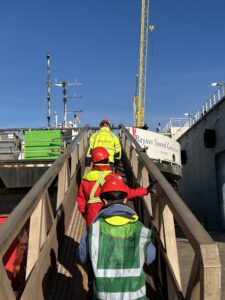
But thanks to his keen interest, Eli hasn’t let his age stop him from learning more about career opportunities out on the water. And, a few months after meeting Barry, he was doing just that, stepping onto the Seaspan Kestrel tugboat docked at Seaspan’s marine headquarters in North Vancouver (along with his mom, Gaea).
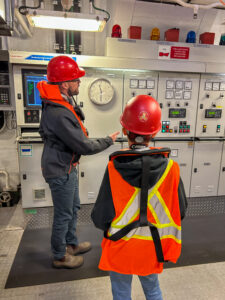
The tour started in the engine room where Kyle and Eli chatted about the azimuth propulsion system before heading up to the bridge, with plenty of time for questions along the way.
“What is the furthest south or north you’ve taken a tugboat?”
“When I first started at Seaspan in 2011 we were doing more general towing, so we did occasionally bid on projects that took us beyond the west coast. That include heading down to Mexico to load salt onto a barge at Isla de Cedros and projects up in the Arctic.” Kyle explained, climbing the stairs up to the bridge.
“I remember being on the Seaspan Royal, heading up the coast up to Haida Gwaii while towing the Hercules, a self-dumping log barge. That was a really memorable journey. Nowadays the most north we’ll go is Port Hardy, we tend to stay within B.C.”
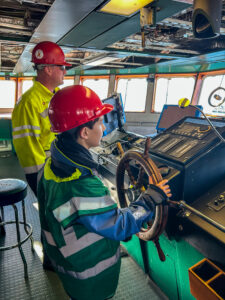
Up in the bridge, Eli got a sense of the tugboat’s navigation systems. He explained that a family friend had worked on board a tugboat and gotten him interested in the potential of a career in the marine industry.
When he’s older, Eli is hoping to attend Cal Maritime in California to pursue a bachelor of science in marine transportation.
After a quick detour to look at the 11-ft-Lego Icebreaker model at the Vancouver Shipyards corporate office, Eli and Gaea made their way to Vancouver Drydock where they met with Barry.
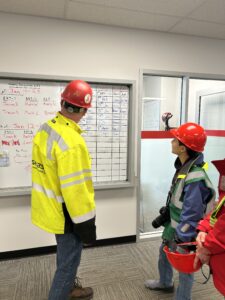
“The drydock is a fast-paced yard,” explained Barry, standing in front of a large whiteboard with a schedule on it. “We dock multiple vessels at once, and repairs are often quick turnaround projects to help get customers back into the water. For that reason, it’s important to have a detailed docking plan in place.”
Each vessel that comes in for maintenance or repairs has a wooden base built for it to rest on when the dock lifts it out of the water. With a docking plan, crews know what the blocks that will hold up the vessel need to look like.
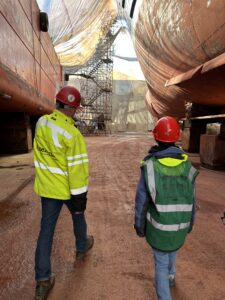
After putting on hardhats and PPE, the group headed onto the Panamax, the largest of Seaspan’s three floating drydocks, where Barry explained the process of docking a vessel.
“First, you build the base where the vessel will rest. Then the deck of the drydock will sink below the ocean surface, weighed down by sea water in tanks in the walls. The vessel to be repaired is towed into place by tugboats and then the water weighing the dock down is pumped out and it rises back into place, lifting the vessel with it.”
The group walked underneath various vessels and got a closer look at vessels like the Baynes Sound Connector and the CCGS John P. Tully.
Eli already had a sense of why a few of the vessels were in for repairs, which was unsurprising to Barry, who started his career as a carpenter at a shipyard in the Netherlands before working at sea for over a decade, first as a deckhand and later working his way up to first officer.
“I have never met a kid who loves boats as much as he does,” Barry said.
Eli’s mom, Gaea, has also been supportive of Eli’s interest. “It’s been really lovely because every single person has been so gracious with their time and sharing about their profession,” she said.
Eli’s journey in the marine industry is just beginning, but his curiosity and commitment to learning more about a career at sea is proof that taking the step to start a conversation can create unexpected opportunities.
Additional photos from the tour: