January 19, 2026
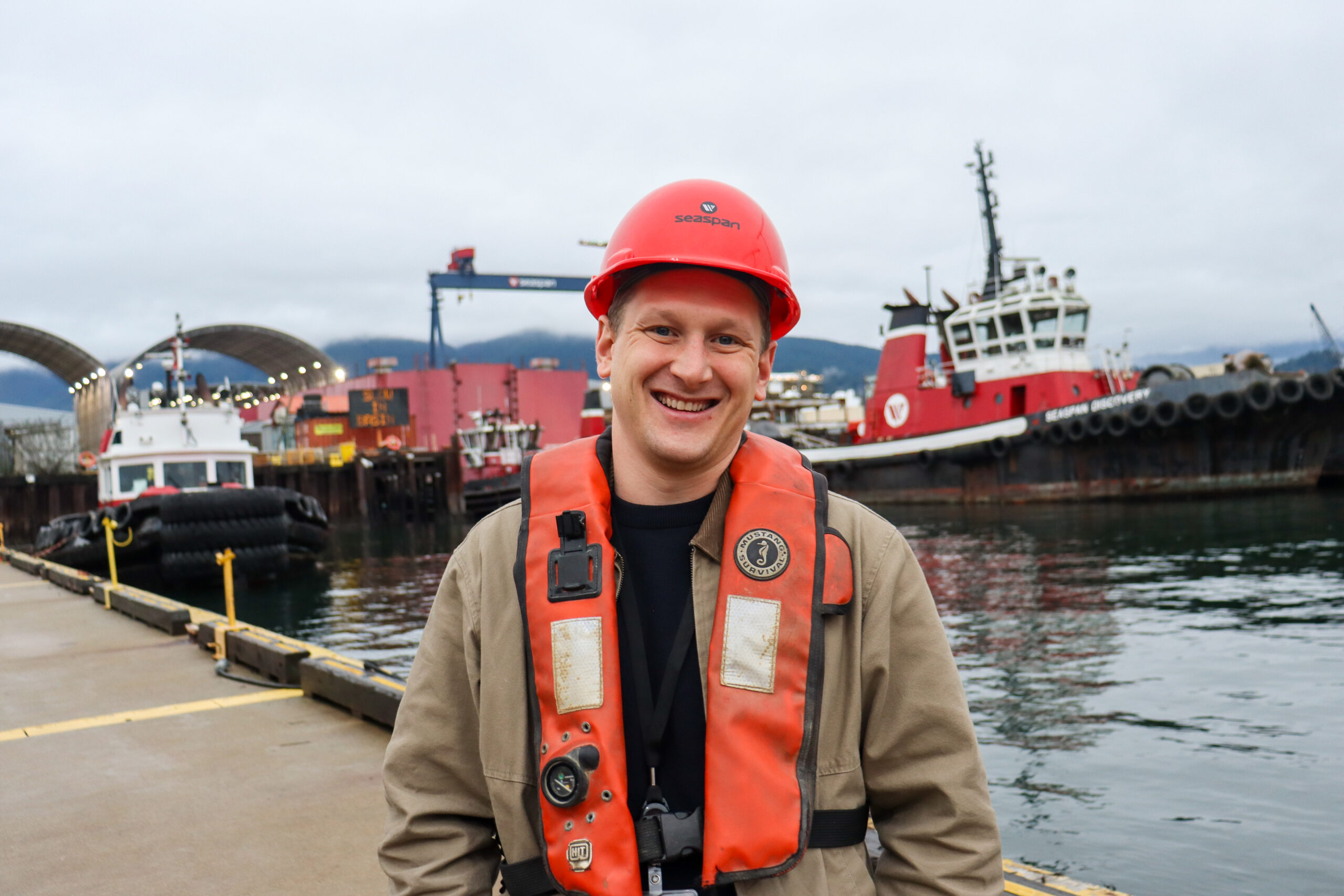
Years before Christopher Sullivan became a Vessel Dispatch Coordinator at Seaspan Marine, an ordinary lunch break and a few wistful words from an older coworker changed the trajectory of his career.
Christopher was a carpenter working on a house in West Vancouver, gazing at the waters of Vancouver Harbour at lunch. If he’d chosen to eat elsewhere, he might have never seen his coworker point to a tugboat docked by the shore.
“If I could do it all over again,” they said, “I would have gotten a job out on the water.”
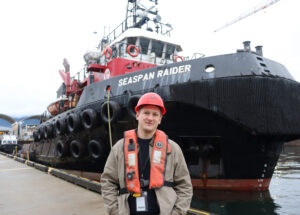
It flipped a switch in Christopher. Before he knew it, he had followed his newfound interest in life as a seafarer and built an exciting career in B.C.’s marine industry. He climbed his way up to chief mate on dredges, tugboats and ferries before transitioning to a career ashore at Seaspan Marine.
“It’s a fantastic career,” he said. “It’s given me things in my life that I wouldn’t have had otherwise.”
As a Vessel Dispatch Coordinator, Christopher oversees the allocation of Seaspan Marine’s fleet of tugboats and barges across Canada’s West Coast. When describing what the role entails, Christopher could only sum it up as, “Everything.”
A sudden maintenance issue on a tugboat? Vessel dispatch coordinators call in different boats to complete the job. A scheduling conflict between crew members? They find available mariners to fill that gap. In a 24-hour harbour, any small issue could cascade through and reshuffle their entire day.
“We keep the boats moving, because without the tugboats moving the harbour would come grinding to a halt.”
They’re always on the clock, receiving and coordinating information from mariners, port captains, logistics teams, commercial teams and everyone in-between.
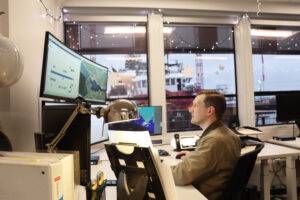
“My coworker described it to me as 3D chess,” he said. “There are so many moving pieces with maintenance and crewing, and we’re not just dealing with mechanical objects like a tugboat, but there are people on board, too. It’s not just set it and forget it.”
He can count on the job to bring new challenges every day. It’s the exciting and ever-changing nature of working in, not only in the heart of Seaspan Marine, but the Lower Mainland’s marine industry. As a major player in the harbour, Seaspan Marine coordinates more than 2,500 ship assists every year and has been operating in the Pacific Northwest for more than 130 years.
“Locals know the Seaspan name and brand,” he said. “If you’ve spent any time in Vancouver, you’ve seen the logo, you’ve seen the red boats.”
While today Christopher supports mariners from the shore, the bulk of his career was spent on the water. After completing a bridge watch rating program, giving him the qualifications to work on a ship, he joined teams across B.C.’s marine industry including sister-company Seaspan Ferries, Fraser River Pile & Dredge and Amrize.
As a mariner on a tugboat, he would work two weeks on, two weeks off, travelling along the West Coast from Prince Rupert, B.C. all the way to Tacoma, Washington. It was just him and four crew members alternating between six-hour shifts, keeping watch and keeping each other safe.
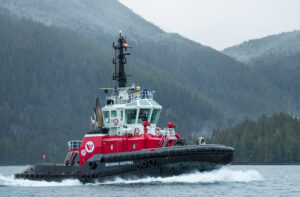
“When you’re on board, you’re the firefighter, you’re the cook, you’re everything. You only have five crew members, and you rely on each other to do everything because those are your resources available.”
But as grueling as it can be, Christopher described the unique magnetism of life on the water, surrounded by endless horizons and immersed in the hum of a tugboat.
“On land, you don’t have the rumble of the boat, the swaying of the ocean,” he said. “It’s a different kind of excitement when you’re working around heavy machinery.”
He was nervous to make the leap to a job ashore, but discovered that many of Seaspan Marine’s employees, including President Jordan Pechie, were once mariners themselves. In fact, it’s an invaluable advantage to connect with the mariners still on the water and understand exactly how to support them.
“It runs right through the building, that background,” he said. “It’s really inspiring to see, that there are career paths and growth opportunities ashore.”
As much as Christopher likes his job on solid ground, he’ll always remember when it was just him, his crew, and the waves. The sea isn’t easy to forget.
“It’s a romantic thought to be on the water.”